You’ve heard it before: you never get a second chance to make a first impression.
But what if I told you that impression is already being made—before you even say a word?
As a personal stylist, I’ve spent years helping clients refine their wardrobes, but what we’re really working on isn’t just “what to wear.” It’s identity. Mood. Energy. Your outfit speaks volumes long before you open your mouth, and the psychology behind it is fascinating—and powerful.
Style Is a Silent Language
Before someone hears your voice, they’ve already noticed your shoes, the drape of your jacket, the colour you’re wearing. In fact, studies show that people form first impressions within 7 seconds—and much of that is based on visual cues.
Your clothes, whether intentionally styled or thrown on in a rush, communicate:
• Your confidence (or lack of)
• Your attention to detail
• Your social awareness
• Your personality and priorities
Is your outfit polished and thoughtful? Effortlessly cool? Comfort-focused? Every detail tells a story.

Dress” RAT & BOA Inez Dress £255
Colour: The Mood-Setter


Sandro LONG WRAPAROUND DRESS £287.2 | Anthology . The Lily One-Shoulder Satin Maxi Slip Dress £108
Colour psychology is real—and it plays a huge role in how others perceive us (and how we feel about ourselves).
• Red signals power, passion, and presence. It grabs attention and exudes confidence.
• Blue suggests calm, trustworthiness, and professionalism.
• Black is associated with sophistication, control, and elegance.
• White conveys clarity, simplicity, and openness.
• Yellow brings energy and optimism, but in excess, can be overwhelming.
Stylist Insight: Want to command attention in a meeting without saying a word? Wear red. Need to come across approachable and steady? Try a soft blue.
Fit Speaks Volumes
You could wear a designer label from head to toe, but if it doesn’t fit well, it won’t send the right message. Tailoring signals self-respect, intentionality, and a sense of personal pride.
Too tight, and it can look like you’re trying too hard. Too baggy, and it might suggest insecurity or lack of polish. The right fit says: I know who I am, and I care how I present myself.
Texture, Structure & Accessories: The Details That Define You
A leather jacket and a cashmere cardigan both keep you warm, but the messages they send are wildly different.
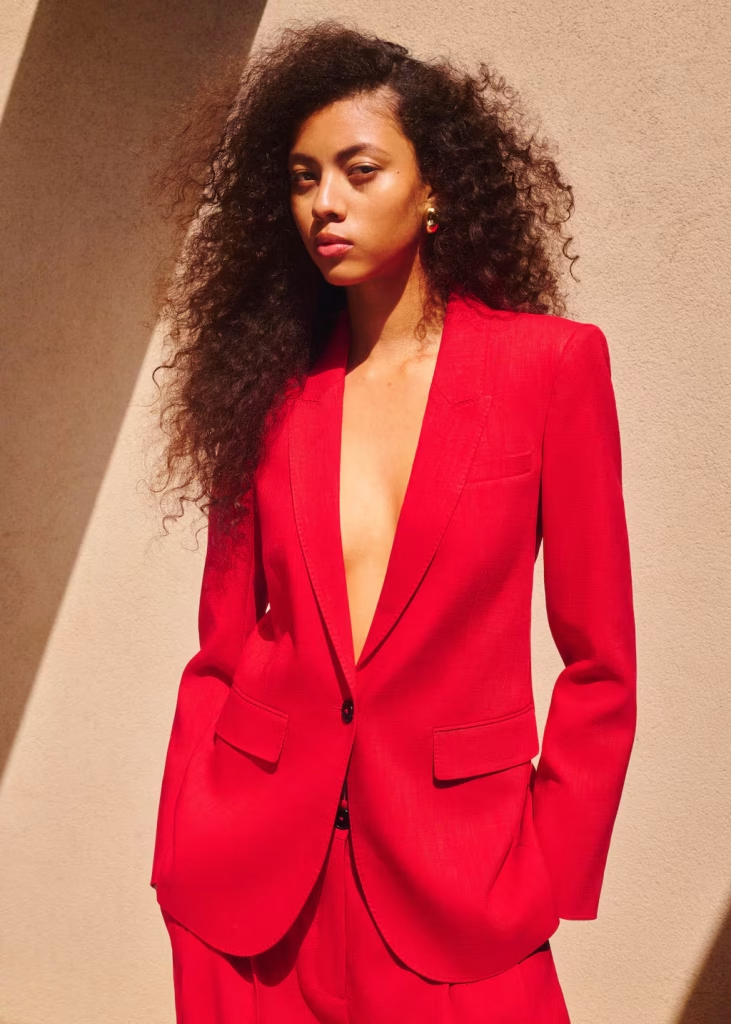
ME&EM pop colour sharp shoulder straight blazer £325
• Structured pieces (blazers, sharp tailoring) suggest authority and purpose.
• Soft, flowing fabrics feel more approachable, relaxed, even romantic.
• Statement accessories (bold jewellry, unique shoes) indicate creativity and confidence.
• Minimal styling can project clarity and intentional simplicity.
Stylist Tip: Your accessories are like punctuation in your outfit. Use them to emphasise who you are or how you feel that day.

The beauty of personal style is that it’s just that—personal. But when done with intention, it becomes your most powerful nonverbal tool. Every morning, you get to tell the world who you are—or who you’re becoming.
So tomorrow, when you get dressed, ask yourself:
What do I want to say—before I speak?