
It would be all too easy to let your spirits sag as the temperatures drop and summer slides inevitably into autumn. Kids back at school, traffic on the roads, nights drawing in, soon be Christmas. You know the feeling.
As Dylan Thomas once said, ‘Do not go gentle into that good night’, let me reassure you that there is an abundance of life left in your garden to enjoy in the weeks to come. And what better way to inspire you and lift your spirits than a spot of Open Garden visiting. Yes, even now, in September!

I’ve just been to Great Dixter in Kent, the home and garden of the late, lamented ‘Christo’ Christopher Lloyd, Father of Colour. Although he has been dead for nearly 20 years, his legacy lives on through the Great Dixter Charitable Trust, led by his dear friend and protégé Fergus Garrett. Back in the early ‘90s, Lloyd caused consternation amongst the horticultural great and good, by ripping out his rose garden to create an Exotic Garden in its place. With his bold use of colour and larger than life architectural plants, he threw away the rule book, to create one of the most dazzling gardens in the world.
As you traverse the crisscross borders from room to room, you get the strangest feeling that you are three feet tall, an Alice Through the Looking Glass kind of moment. Plants tower above you and billow out in your path. You can’t see where you are going so there are breathtaking surprises around every corner. This is a high maintenance garden that manages to look like the plants have just arrived and settled in of their own accord. But at no point do you feel that this garden is on the wane!
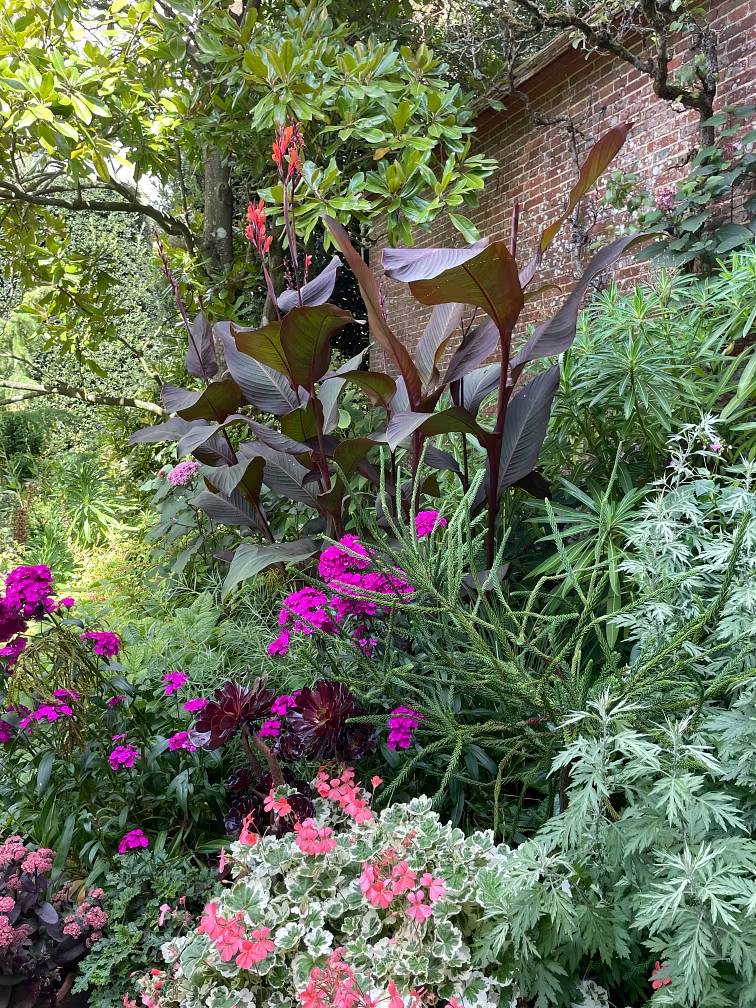


Great Dixter, home and garden of ‘Christo’ Christopher Lloyd
Here’s the thing: there are certain practices, call them tricks of the trade if you will, that you can adopt in your own gardens, to prolong the season way into October.
Mix It Up
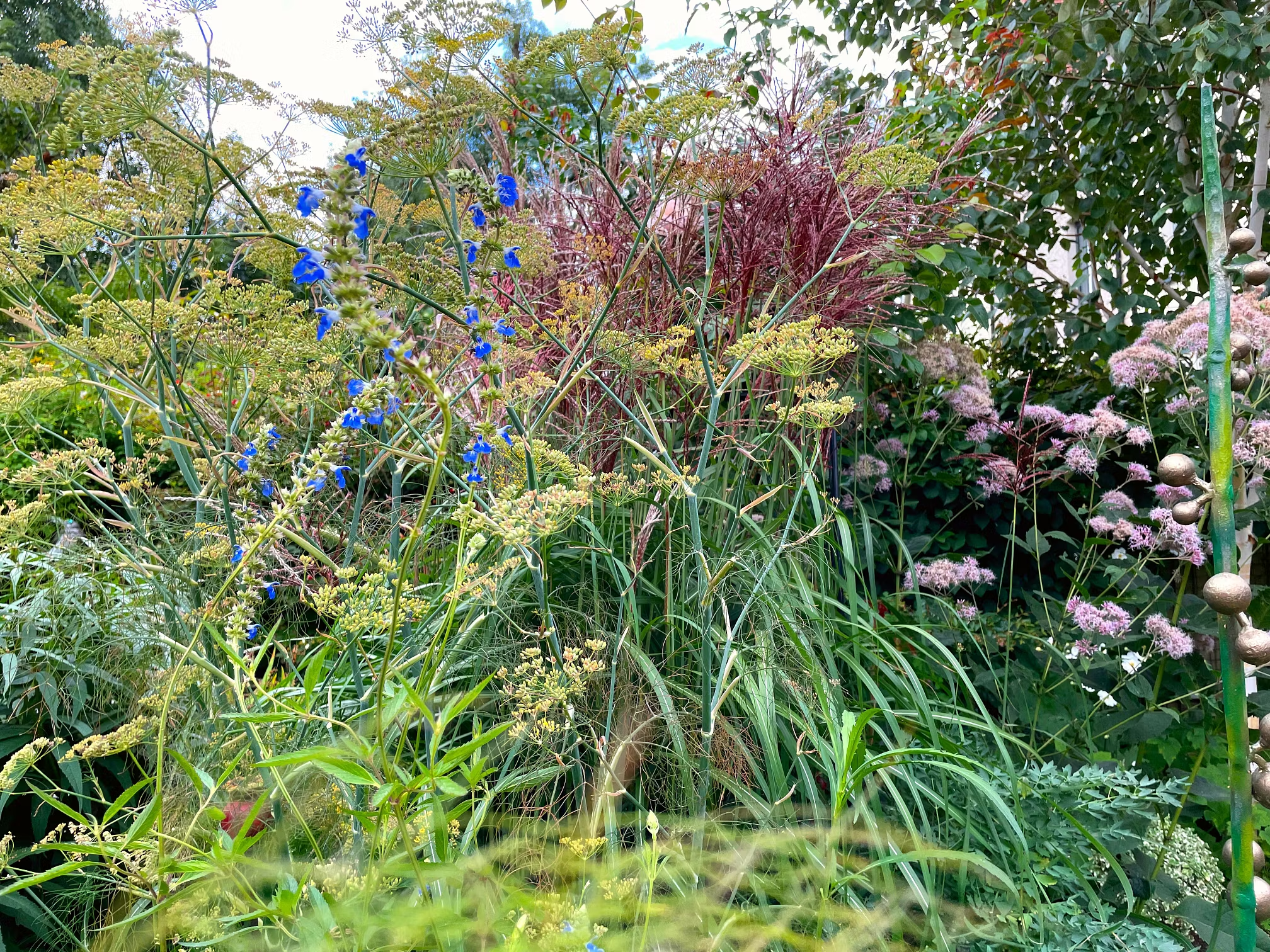
We have perhaps been too quick to tidy up in our gardens at the end of summer, wanting only to see plants that are in peak flowering condition. But at Great Dixter, the plants are at all different stages of their life cycle. Full bloom intensity of colour, jostling with skeletal stems, ornamental grasses, desiccated seed heads, hips, tassels, tawny leaves, all creating maximum visual impact, as well as providing food and shelter for birds and pollinating insects as supplies dwindle.
Curating your garden’s borders
How you choose what goes and what stays is mainly down to you. It doesn’t have to be all or nothing. Consider the amount of time you wish to spend gardening as the weather changes; allowing your borders to set seed will significantly reduce your autumn workload. Most of the large estates leave their borders over winter, then blitz them all in one go in early spring. Current thinking encourages us to leave well alone until late winter, for the benefit of wildlife. On the other hand however, it also provides safe haven for slugs and snails. But there’s no fixed deadline. I find that by gradually deadheading and cutting back, right through the autumn and winter, the garden keeps looking fresh and well maintained all the way into Spring.
But how do you decide? Some plants ‘die’ well while others collapse into a soggy mess. Sturdy stems such as fennel, foxglove, veronicastrum, day lilies, echinacea and crocosmia can stay on all through the winter months, providing much needed height and structure to the winter garden, adding sparkle when dusted with frost. Phlox and lilies look tatty after flowering, so first nip the flower heads off and then, as the leaves start to crinkle and brown, cut them down to ground level. When hardy geraniums and astrantias start to get mildew, they can go too. But, do you know what, there is no right or wrong way. Stay or go? It doesn’t really matter, nobody died, right?
Flowers for Colourful Impact
The simplest way of ensuring that you have colour in your early autumn borders is to visit the nursery or garden centre and buy hardy perennials that are in flower. Plant them now and they will have time to settle their root system into the warm soil before the winter, to reward you year after year. Asters, rudbeckias, helenium, sedum, persicaria, are all as tough as old boots and will flower until the first frosts.
But if you want some really drop-dead gorgeous showstoppers, then its half-hardy perennials you’ll need. Being half hardy, they probably wouldn’t survive the winter if planted out into the border, unless you live in a very sheltered part of the UK, such as London or the Southeast, and have very well drained soil. That rules out clay soil, I’m afraid. But you can still achieve the look with this canny short cut: Plant up your exotics into large lightweight, black plastic pots and simply place them in the gaps you have created in your borders. Alternatively, you can sink them into bare patches of soil for a more integrated look.

For maximum impact go for salvias, cannas, ginger lilies, dahlias. That way you can have colour in your borders right up until the first frosts, as late as the end of October in some areas. At the end of the season, simply lift them out of the borders, and store them in a cool, frost-free greenhouse, garden shed, garage or porch over the winter. Cut back the dead top growth at the end of March, before relocating them to a sheltered, sunny position, feed them every fortnight with a liquid tomato feed, and repeat next summer.
Go big on ornamental grasses
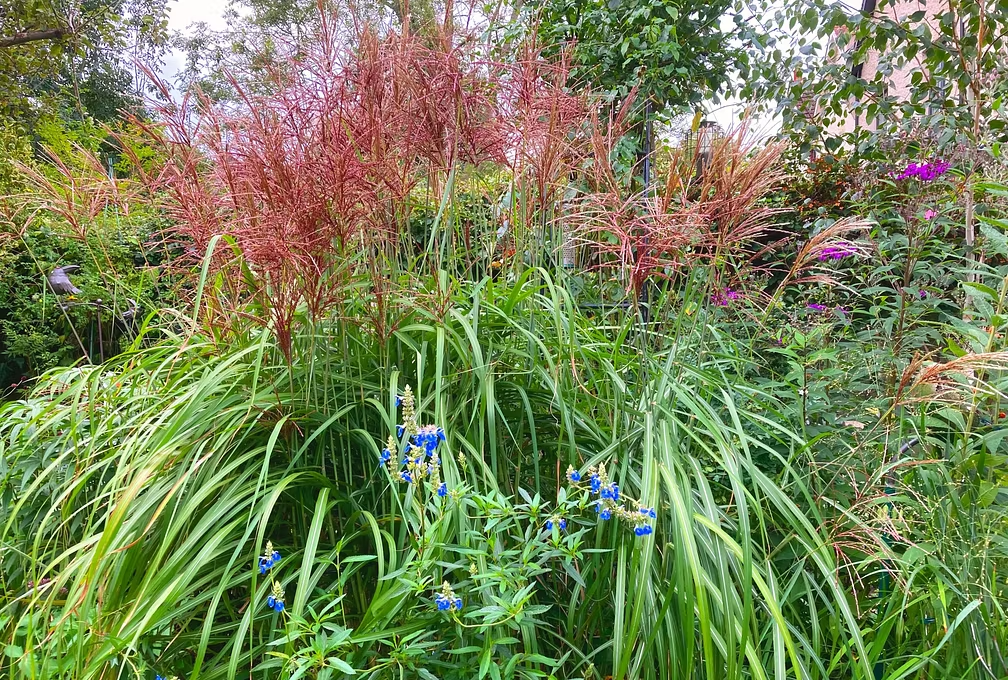
Ornamental grasses first made the horticultural headlines back in the nineties when Dutch designer Piet Oudolf pioneered Prairie Planting. Based upon the vast swathes of grasses and tall perennials native to North America, this naturalistic look can be achieved by planting in drifts if you have a large garden, or in groups of three if space is limited. Incorporate grasses like Calamagrostis Karl Forster or miscanthus, with its crimped coppery tassels, to add stature and structure, and smaller grasses like evergreen carex for soft focus edging. The gentle swishing of the grasses, as the wind passes through their foliage and seedheads, adds movement and fluidity to the picture. A fine example of this style can be found at Kathy Brown’s Garden, near Bedford, open until 30th September.


Kathy Brown’s Garden, near Bedford, open until 30th September.
So, you’ve got structure from architectural seedheads, colour from late flowering perennials and movement from ornamental grasses. I’m guessing that a large number of you have shrubs in your gardens and are wondering where they fit into this picture. Evergreen shrubs provide the backbone of a garden, giving year-round interest and focal points during the bleakest months. Deciduous shrubs offer autumn colour, first from their leaves and then their bare stems, such as dogwoods. The desiccated flower heads of hydrangeas look particularly lovely in winter.
And finally, for now, if you love gardens but not gardening; if your time is limited, then here’s a tip. If you do nothing else, always keep your lawn edges neat and defined. It can make an entire garden appear tidier, even if the rest of the lawn or the borders aren’t pristine.


